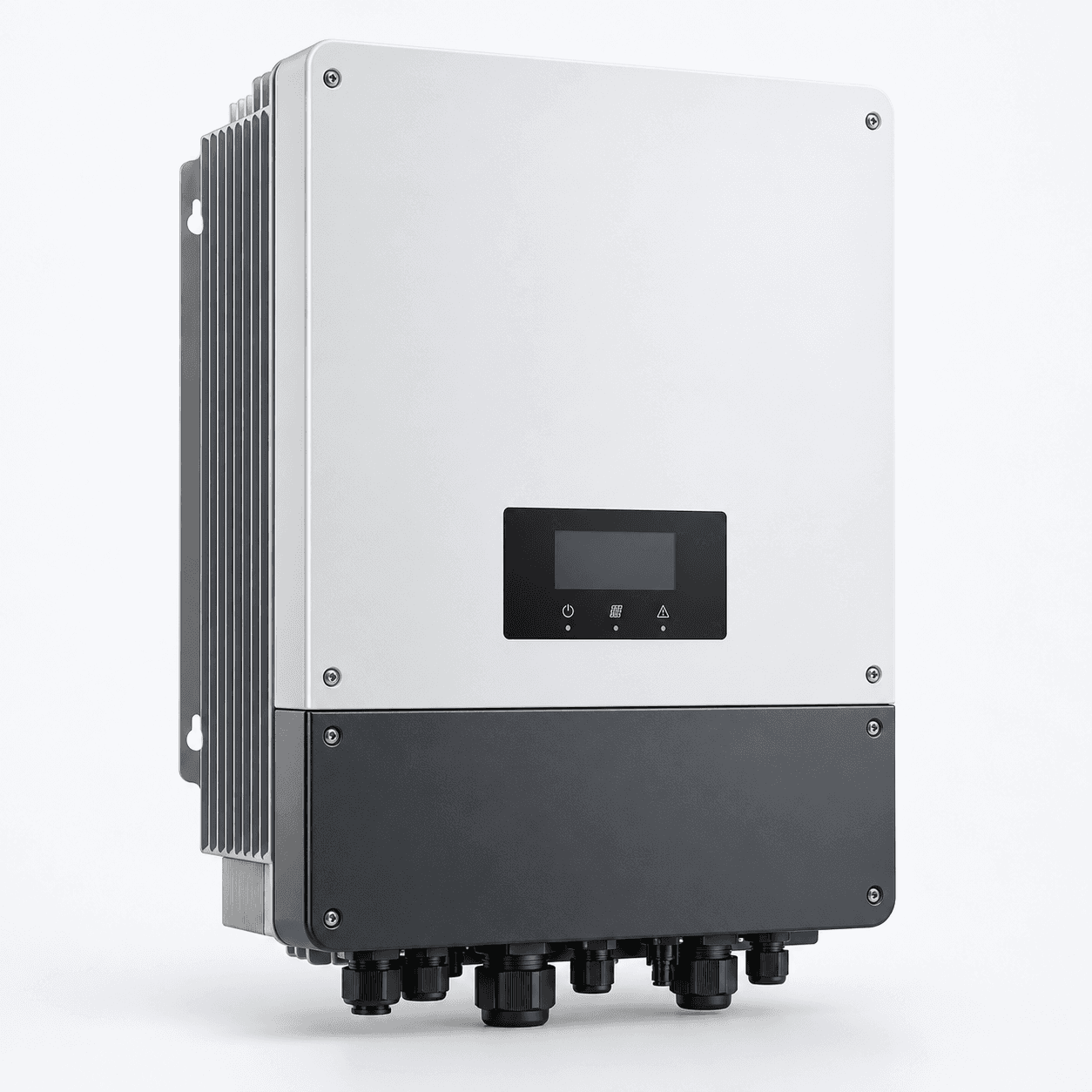
Understanding inverter surge power
A compressor can fail to start even when average power is well below the inverter rating. The complete DC-to-AC path must support the event.
Sources and methodology
Source-based desk research and explicit calculations; no hands-on testing claimed. Missing values remain unknown. Installation compatibility needs a separate assessment.
Duration matters
Compare required starting current and duration with the inverter overload curve. A peak number with no time basis is insufficient. The same inverter may handle a short electronic inrush and fail a motor requiring several seconds to accelerate. Avoid a universal multiplier for every appliance: use measured starts or documented load information, especially for compressors, pumps and transformers.
The battery can be the limit
An inverter cannot deliver power its battery cannot supply. Voltage sag in the cells, cables and terminals can trigger undervoltage shutdown before the inverter's own surge limit is reached. A BMS may also disconnect on its current timer. Check the weakest element in the path and evaluate at low state of charge, where voltage margin is smaller.
Manage simultaneous starts
Sequence loads where the application permits it. Starting a pump after a refrigerator has settled can reduce the worst event without changing daily energy. A suitable soft starter or drive may help a particular motor, but compatibility and machine safety must be reviewed. Do not solve nuisance trips by simply fitting a larger fuse; that can leave the conductor unprotected.
Worked case and decision
A 600 W running motor may have a measured start near 1800 W for one second. Add 300 W of electronics that remain on and the system sees about 2100 W during startup. A hypothetical inverter advertised at 3000 W peak for 20 milliseconds has not demonstrated that it can support this event. The battery can also cause a failure even when the inverter curve appears sufficient: BMS overcurrent protection or voltage sag may interrupt the DC supply. Record the event duration, battery state of charge and temperature when evaluating a supervised startup test. If the appliance starts successfully once with a full battery, repeat only within approved operating limits under representative conditions; a single success is weak evidence. Where possible, compare manufacturer-supported soft-start or sequencing options, and recheck machine safety and automatic restart behaviour before changing control settings.
Turn the explanation into a procurement brief
Record included and excluded loads, system voltage, simultaneous power, starting demand and required duration. Keep efficiency and seasonal assumptions beside the result. Compare only documented values for the exact model; a missing catalog field means it needs verification, not that a feature exists. Ask the supplier for the manual, Romania delivery terms and warranty procedure before ordering.
After selecting components, a qualified installer should verify cables, protection, source isolation, ventilation and site conditions. Do not use a worked energy example as wiring instructions. When changing a load or battery, revisit both the energy budget and power check. A supervised operating test should confirm assumptions without exceeding manufacturer limits.
Sources and technical reading
Independent editorial explanation. Numerical examples are illustrative calculations, not specifications attributed to a product.