RV solar basics
A practical planning guide: define the job, work through the energy and compatibility constraints, then prepare a supplier brief.
Sources and methodology
Updated: 2026-10-17
Source-based desk research and explicit calculations; no hands-on testing claimed. Missing values remain unknown. Installation compatibility needs a separate assessment.
Define the requirement
A travel energy budget begins with how you camp. A vehicle moving daily can use alternator charging; a vehicle parked for several days needs solar, shore power or larger usable storage. Count refrigeration, ventilation, lights, pumps and device charging over a full day. Record which loads use DC directly and which require an inverter so conversion losses are assigned correctly.
Work through the system
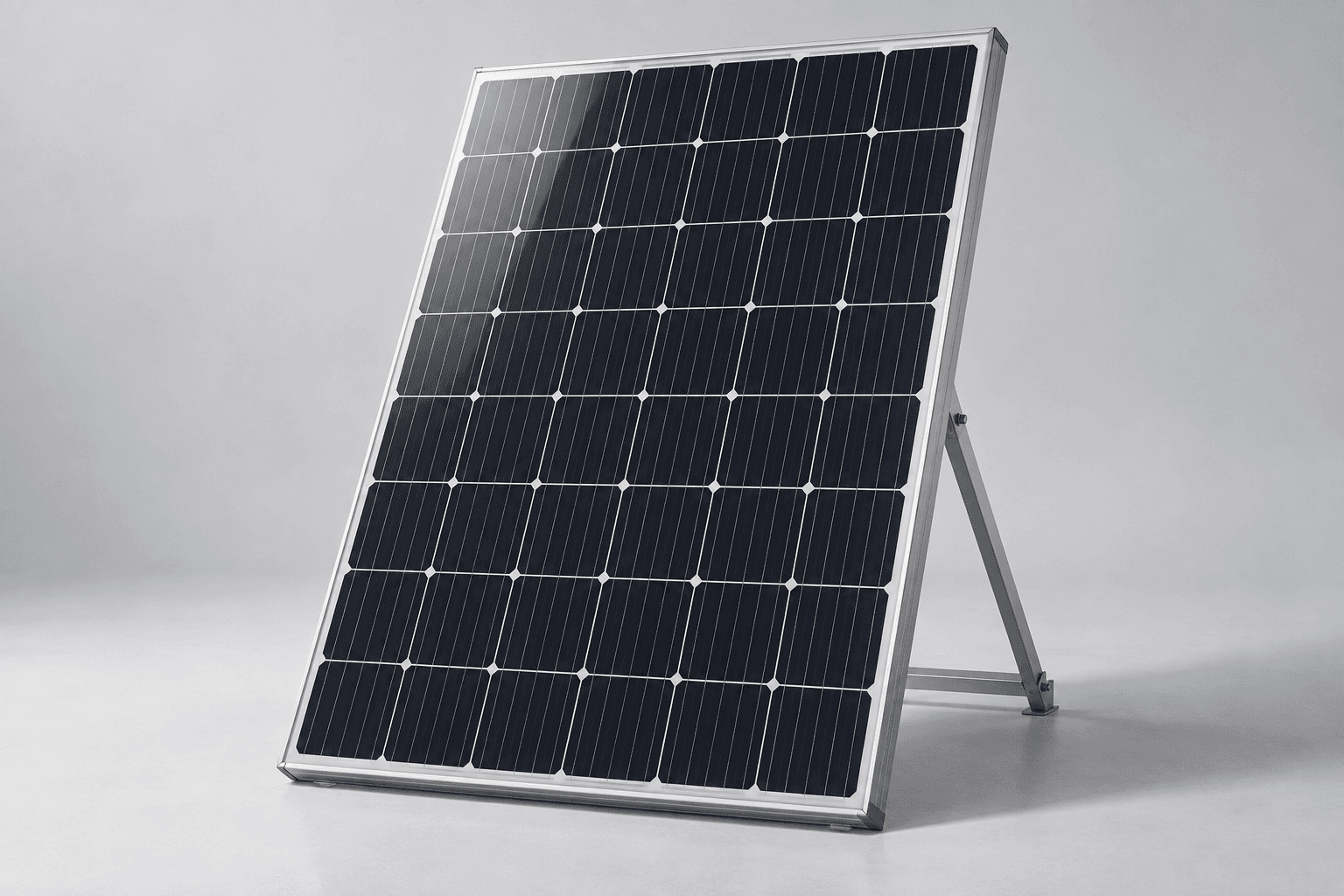
Measure usable roof area after vents, aerials and mounting clearances. A panel that fits geometrically may still sit under frequent shade. Portable panels can be placed in sun while the vehicle stays cool, but need handling, secure connectors and daily setup. Size the array from your travel-season yield and daily Wh, then verify cold-weather PV voltage against the controller.
Before selecting equipment
Keep starting and house-battery functions distinct. Verify alternator compatibility and charging profiles when changing battery chemistry. Total charging from simultaneous sources must remain within battery limits. Secure battery mass, protect cables at penetrations and provide accessible isolation. Monitor one complete travel day and compare the measured deficit with the design before expanding the array or battery.
Worked case and decision
Assume the caravan uses 1200 Wh per day. An illustrative 400 W array with 3.5 equivalent sun hours and a 0.75 yield factor produces about 1050 Wh per day, leaving a 150 Wh daily deficit even before any uncounted loads. A larger battery delays depletion but does not remove this persistent deficit. Compare reducing consumption, adding panel area, charging while driving or using an approved shore-power charger. On a shaded campsite, portable panels may find better sunlight than roof panels, but introduce setup, cable and weather-management requirements. Check roof structure, available area, shading from vents and actual payload before choosing rigid or flexible modules. Record the refrigerator mode and seasonal heating-fan demand in the energy table. Finally, verify alternator compatibility and the vehicle manufacturer's restrictions before assuming driving time provides unrestricted charging power.
Worked one-day RV energy budget
The values below are assumptions for a reproducible example, not measurements. Replace power and time with your appliance data. Actual running time can differ from the period an appliance remains connected.
On small screens, scroll the table sideways to see all values.
| Load | AC/DC | W | Hours | Wh |
|---|---|---|---|---|
| DC refrigerator, total compressor running time | DC | 45 | 8 | 360 |
| DC lights | DC | 12 | 5 | 60 |
| DC water pump | DC | 60 | 0.25 | 15 |
| Laptop through inverter | AC | 60 | 3 | 180 |
| Total delivered to loads | 615 | |||
Calculation assumptions: 80% usable battery fraction; 92% inverter efficiency for AC loads only. Nominal storage is (DC Wh + AC Wh / 0.92) / 0.80. 788.3 Wh.
This threshold excludes inverter idle consumption, DC distribution losses, ageing and weather reserve. For example, an additional 10 W for 4 hours adds 40 Wh to the DC budget and 50 Wh to nominal storage at an 80% usable fraction. Enough energy does not establish startup capability, BMS limits or UPS operation.
What changes the result?
If compressor running time increases from 8 to 12 hours, the refrigerator adds 180 DC Wh, or 225 nominal Wh at an 80% usable fraction. Two days without recharging doubles the energy budget; it does not automatically double simultaneous power. Evaluate solar and alternator charging separately from battery capacity.
Turn the explanation into a procurement brief
Record included and excluded loads, system voltage, simultaneous power, starting demand and required duration. Keep efficiency and seasonal assumptions beside the result. Compare only documented values for the exact model; a missing catalog field means it needs verification, not that a feature exists. Ask the supplier for the manual, Romania delivery terms and warranty procedure before ordering.
After selecting components, a qualified installer should verify cables, protection, source isolation, ventilation and site conditions. Do not use a worked energy example as wiring instructions. When changing a load or battery, revisit both the energy budget and power check. A supervised operating test should confirm assumptions without exceeding manufacturer limits.
Sources and technical reading
Independent editorial explanation. Numerical examples are illustrative calculations, not specifications attributed to a product.